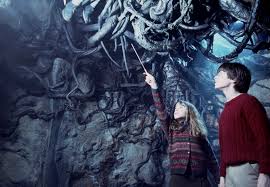
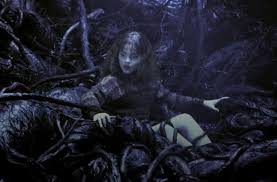
Meaning:Devil's Snare is a magical plant that thrives in the dark and strangles
anything that struggles. It hates light and warmth, so staying calm and using light helps to escape
it.
Uses: A plant that entwines and squeezes anyone who touches it. You can only escape
by staying calm and stil.
Characteristics: A magical plant with snake-like tendrils that strangles its
victims.
Weakness: It detests light and fire. The "Lumos Solem" charm is particularly
effective against it.
Appearance:Devil's Snare appears as a mass of spongy, springy vines that are
initially inert.
Story Appearance:This plant is featured in Harry Potter and the Philosopher's
Stone.
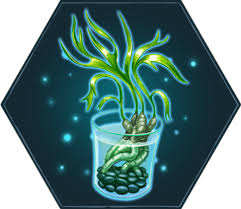
Meaning:Gillyweed gives the user gills and webbed hands and feet, allowing them to
breathe underwater for a certain period. It is used during the Triwizard Tournament.
Uses:A plant that allows breathing underwater. It makes humans capable of diving
like a skilled diver.
Effect: When eaten, it causes the user to grow gills and webbing, allowing them to
breathe underwater for about an hour.
Appearance: Looks like a bundle of slimy, greyish-green rat tails.
Appearance in the Story:Used in Harry Potter and the Goblet of Fire during Harry's
Second Task.
Historical Use:In the Harry Potter series, Gillyweed is famously used by Harry
Potter during the second task of the Triwizard Tournament to rescue Ron Weasley from the depths of
the Hogwarts lake.
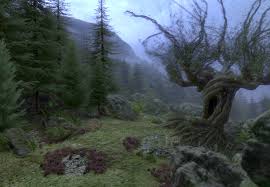
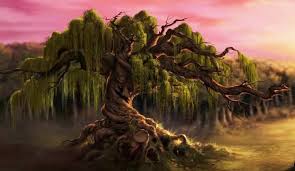
Meaning:The Whomping Willow is a violent tree located on the Hogwarts grounds.
It attacks anything that comes too close and hides the secret entrance to the Shrieking Shack.
Uses:Whomping Willow was planted to conceal a secret passage leading to the
Shrieking Shack in Hogsmeade.
Nature: A highly violent tree that attacks anything that comes near its branches.
Secret: A knot on its trunk temporarily paralyzes it, revealing a secret passage to
the Shrieking Shack.
Sentient:The Whomping Willow is not just a dangerous plant; it's sentient, meaning
it can sense and react to its environment. It attacks anything that gets too close.
Appearance in the Story:The Whomping Willow in the Harry Potter series is a
violent, sentient tree located on the Hogwarts grounds. It's characterized by a massive trunk,
animated branches that lash out with force, and a secret passage hidden at its base leading to the
Shrieking Shack in Hogsmeade.
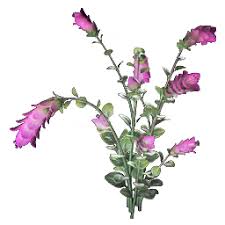
Meaning:Dittany is a powerful magical healing herb. It is used to treat deep cuts,
bites, and other life-threatening wounds. When applied immediately, it can prevent scarring and help
tissues regrow. It is often used in essence form.
Uses: A plant that can quickly heal severe wounds.
Primary Use: A powerful healing herb. Its essence can heal deep cuts and prevent
scarring.
Appearance:Dittany is first mentioned in Harry Potter and the Sorcerer's Stone and
is featured throughout the series as a valuable healing herb.
Application: Just a few drops applied to a wound will cause new skin to grow over
it almost instantly.
Appearance in the Story:In Deathly Hallows, Hermione used it for Ron's wound.
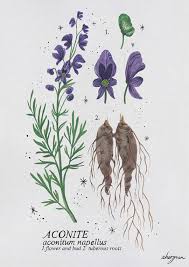
Meaning:Wolfsbane is a highly poisonous plant used in potion-making. It's famously
used in the Wolfsbane Potion, which allows werewolves to retain their human minds during the full
moon. Although the plant is dangerous to handle, skilled potion-makers use it with extreme caution.
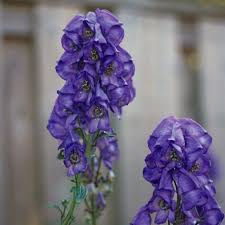
Appearence:Wolfsbane (also known as Monkshood or Aconite) is a plant with dark
green leaves and purple, helmet-shaped flowers.
Aliases: Also known as Monkshood or Wolfsbane. It is a highly poisonous plant.
Use in Potions: A key ingredient in the Wolfsbane Potion, which helps a werewolf
keep their human mind during transformation.
Dangerous:Wolfsbane, also known as Monkshood or Aconite, is extremely dangerous to
humans in the Harry Potter universe, though it also has medicinal properties. While its flowers and
roots are used in potion-making, its leaves are very toxic. Aconitine, the key toxin in Wolfsbane,
can be fatal in small doses, causing a slow heartbeat and potentially leading to death within hours.
Appearance in the Story:Professor Lupin used that potion to control his werewolf
transformation.
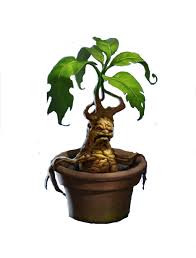
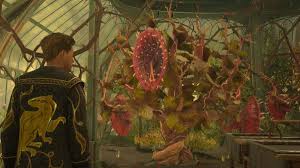
Meaning:The Venomous Tentacula is a dangerous plant with spiky vines and sharp
teeth.
It is studied in Herbology classes and is known for its aggression.
Hogwarts Use:It is used in Herbology classes, with students needing to be careful
to avoid its attacks.
AppearanceThe Venomous Tentacula is a green, spiky plant with mobile vines and
sharp teeth.
Description: A spiky, green plant with mobile vines that try to grab living prey.
Its bite is venomous.
Legality: Its seeds are a Class C Non-Tradeable Substance, though often sold
illegally.
Appearance in the Story:Seen in Herbology class at Hogwarts. It's also mentioned in
Harry Potter and the Half-Blood Prince when Professor Sprout discusses magical plants.
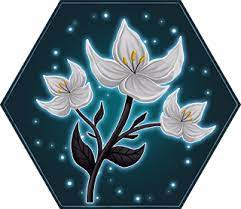
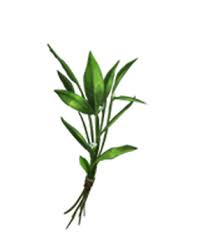
Meaning:Asphodel is a plant whose powdered root is a key ingredient in the Draught
of Living Death potion.
Snape's Potion Question:In Harry Potter and the Half-Blood Prince, Snape asks Harry
what he would get if he added powdered root of asphodel to an infusion of wormwood, testing his
knowledge of potions.
Symbolism: A lily-family plant associated with the underworld and regret in ancient
lore.
Use in Potions: Powdered root of asphodel is a crucial ingredient in the Draught of
Living Death, a powerful sleeping potion.
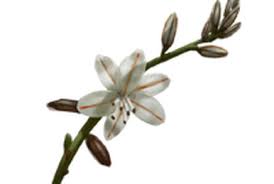
Appearance : Asphodel is described as having long, slender leaves.
Association with Death: Asphodel is strongly linked to death and the underworld in
both magical and mundane lore.
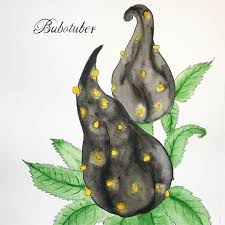
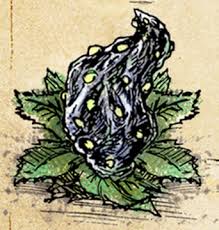
Meaning: Bubotuber is a magical plant that looks like a thick, black slug. When
squeezed, it secretes a yellowish-green pus with strong healing powers, particularly for skin
conditions like acne. However, contact with undiluted pus can cause painful burns.
Appearance: Resembles a large, thick, black slug that squirms slightly. It's
covered in shiny pustules.
Uses:The primary use of bubotuber pus is to treat severe acne. It's a potent
remedy, but it's important to handle it with care and avoid direct contact with bare skin.
Pus: The yellow-green pus is an excellent treatment for severe acne, but undiluted
pus can cause skin irritation.
Appearance in the Story:Seen in Harry Potter and the Goblet of Fire, during
Herbology class when students have to harvest the pus.
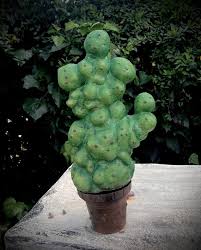
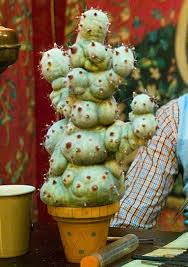
Meaning:Mimbulus mimbletonia is a rare, magical plant resembling a lumpy, grey
cactus covered in boils. When disturbed, it releases a foul-smelling, dark green liquid called
Stinksap, its primary defense mechanism. The plant is notable for its connection to Neville
Longbottom and its use as a password to Gryffindor Tower.
Uses:A defensive plant that immediately squirts when challenged by an external
attack.
Appearance:The Mimbulus Mimbletonia is described as a grey, cactus-like plant with
boils where spines would normally be.
Herbology Importance:The plant is also significant within the context of Herbology,
demonstrating Neville's growing expertise and love for the subject.
Defensive Mechanism:When touched, the plant's boils secrete Stinksap, a green,
foul-smelling liquid. The smell is often compared to rancid manure.
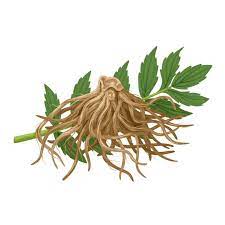
Meaning:Valerian Root is a calming herb used in many sleeping and calming potions
such as the Sleeping Draught and Draught of Peace. It helps to reduce anxiety and induce sleep. It
has a strong odor and must be carefully measured in potions.
Appearance:It is described as a green or brown plant, with its root being the
crucial ingredient.
Uses:Widely used in calming and sleep-inducing potions.
Dangerous:Valerian Root, while used in potions like the Draught of Living Death for
its sedative properties, is not inherently dangerous. It's primarily known for its calming effects
and is used to help with sleep.
Potion Proties:Valerian root is a key ingredient in several potions in the Harry
Potter series, primarily due to its sedative properties. It's used in the Draught of Living Death
and the Draught of Peace, both potions that induce a deep sleep.
Appearance in the story:Sleeping Draught potion, Draught of Living Death
Meaning:Knotgrass is a common magical herb and a key ingredient in Polyjuice Potion
-a complex potion that allows the drinker to take the form of another person. Knotgrass must be
properly prepared and added at the correct stage in potion-making.
Appearance: knotgrass is described as a plant that can be found growing in the
Forbidden Forest, suggesting it might be a somewhat wild and perhaps even thorny plant, given the
nature of the forest.
Dangerous:It's primarily known as an ingredient in the Polyjuice Potion, where it's
used to represent being "tied" to another person, according to the Harry Potter Lexicon. While some
magical plants have dangerous properties, like the Venomous Tentacula or Whomping Willow, knotgrass
is not one of them.
Uses:Ingredient in Polyjuice Potion and other transformation-related potions.
Appearance in the Story:One of the ingredients used in the Polyjuice Potion to
transform into another person.